


The silver spot price is a significant topic for anyone considering the sale of silver jewelry, especially given its remarkable increase—approximately 134% over the past year and a staggering 359% over the past decade. With such a climbing trend in precious metal values, you may find yourself wondering if now is the perfect time to cash in on the silver pieces you have stored away, perhaps nestled in a velvet-lined box.
However, the question of whether to sell your silver jewelry is more nuanced than a simple yes or no. It requires a careful evaluation of your jewelry’s estimated resale value. This process fundamentally hinges on understanding how sterling silver differs from pure silver bullion—a crucial distinction when determining value.
Read next: Can fashion beat finance? How luxury handbags performed against stocks
Understanding Silver Jewelry vs. Silver Bullion
Silver bullion is recognized for its high purity, at 99.9% silver content, often marked with a .999 stamp. This grade is commonly referred to when one discusses the “spot price” of silver. However, an important nuance to grasp is that you cannot sell pure silver for the exact spot price. Dealers typically buy at a lower price than the current spot value and sell at a higher rate, making a profit off the price difference.
The effective cash value of silver bullion can range from 50% to 75% of the spot price, influenced by several factors including where and to whom you choose to sell. Notably, bullion bars and coins from recognized mints often transact closer to the spot price, whereas rare coins may carry additional value.
Read next: Why am I broke? An expert answers
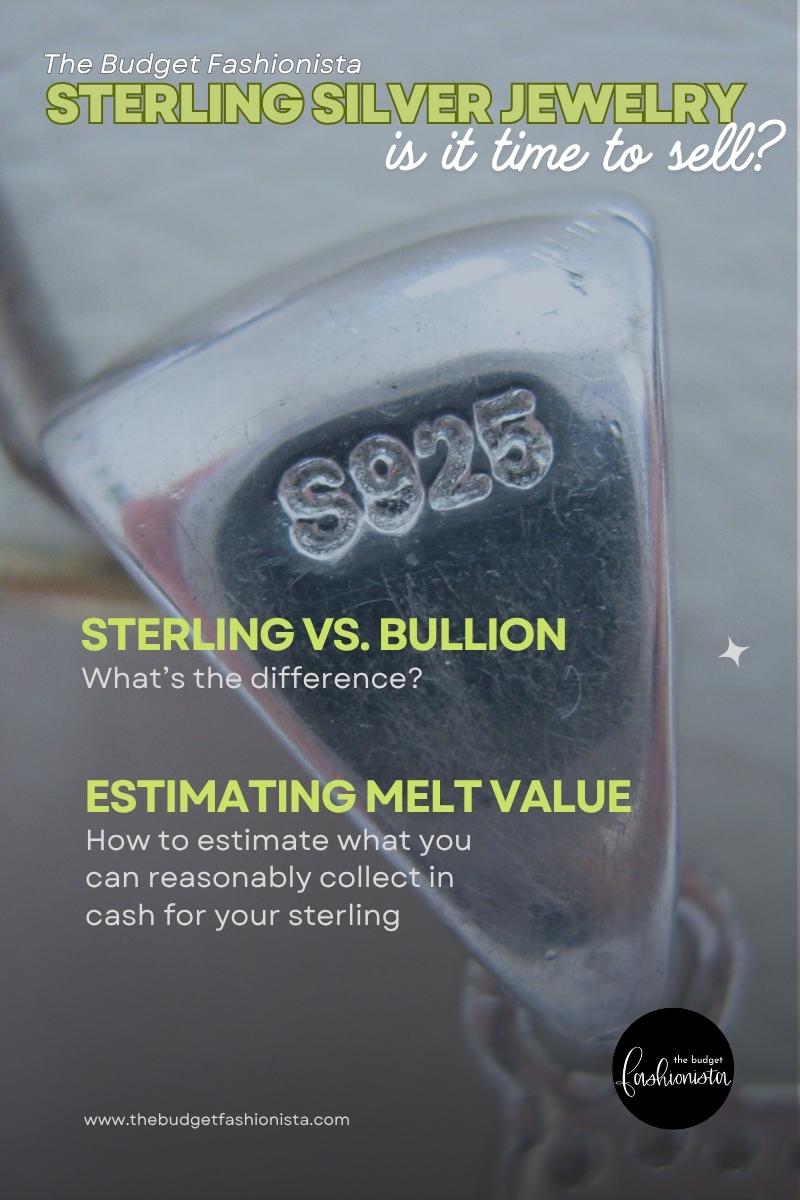
On the other hand, silver jewelry is rarely pure. Most common jewelry items are made from sterling silver, identified by a 925 stamp, indicating a 92.5% silver composition mixed with 7.5% copper. This copper content is integral as pure silver is not ideal for jewelry making due to its softness, which makes it susceptible to bending and scratching. Consequently, sterling silver jewelry typically holds a lower value than pure silver thanks to its diminished silver content.
Evaluating Your Silver Jewelry’s Value
Determining the realistic value of your sterling silver jewelry can be achieved through a simple calculation involving some key steps:
- First, estimate the metal’s weight without including any gemstones or adornments. Remember that the spot price is listed in troy ounces; if you weigh your jewelry in grams, you will need to convert grams to troy ounces (1 troy ounce = 31.1 grams).
- Next, determine the silver content by multiplying the weight in troy ounces by 92.5% (or 0.925).
- Then, take this weight and multiply it by the current spot price, which gives you the estimated melt value.
- Lastly, adjust this melt value by multiplying it by 50% and 75% to account for typical dealer profit margins.
Read next: Don’t try this at home: 10 ways to raise cash fast
Applying the Steps: A Real-World Example
To illustrate this process, let’s calculate the value of a plain sterling silver band:
- Weight estimation: A standard women’s silver band with no stones might weigh around 4 grams. Converting this to troy ounces, we have 4 grams ÷ 31.1 = approximately 0.13 troy ounces of sterling silver.
- Multiply by 92.5%: 0.13 x 0.925 = approximately 0.12 troy ounces of pure silver.
- Using the spot price of $77.58 as of May 18: $77.58 x 0.12 = an estimated melt value of $9.23.
- Calculating resale value: $9.23 multiplied by 50% and 75% gives a resale range of $4.61 to $6.92.
At first glance, the estimated resale value might seem surprisingly low. However, larger pieces like silver cuff bracelets or longer chains can indeed carry more substantial weight and consequently yield higher estimates. For instance:
- A men’s sterling silver band weighing 6 to 15 grams: Worth between $7 to $26.
- A sterling silver cuff bracelet weighing 15 to 50 grams: Worth between $17 to $86.
- A silver chain weighing 30 to 60 grams: Worth between $35 to $104.
Read next: Social Security’s short timeline: 5 new money moves to make now
This may prompt you to dig deeper into your jewelry box to unearth potentially valuable items—but be prepared: unless you hold onto over 1,000 grams of silver, you likely won’t find the amount necessary to cover a month’s rent.
Volatility in Silver Spot Price
While the long-term trend for silver appears positive, short-term fluctuations are to be expected. For example, between mid-April and mid-May of 2026, the silver spot price actually declined by 5.4%. These changes are crucial to consider, as they can directly impact the resale value of your silver jewelry and flatware.
Considering Silver Jewelry as an Investment
Investing in silver jewelry can be a double-edged sword. While its value is, to some extent, derived from the metal itself, the purchase price generally includes additional premiums for craftsmanship, labor, and overhead costs. This aspect makes the resale calculations feel disappointing compared to the straightforward nature of trading silver bullion, which is priced more closely to the spot rate.
Nevertheless, jewelry does offer some intrinsic perks. Wearing and enjoying it adds a level of satisfaction that mere financial gains cannot replicate. Some pieces may even carry sentimental value that transcends any monetary assessment—a wedding ring gifted by a partner or heirloom earrings passed down through generations. It’s a timeless truth: there are some treasures in life that no price tag can capture.