


Wally Funk: A Trailblazer in Aviation and Space Exploration
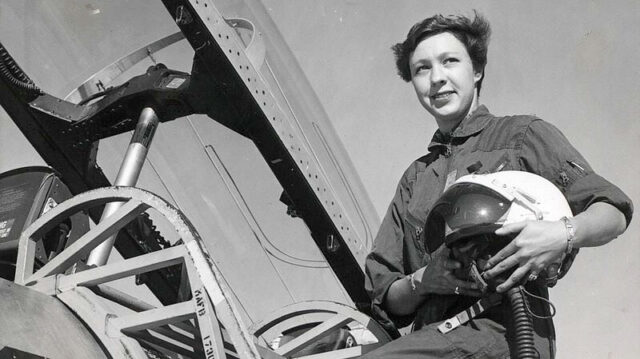
Wally Funk, seen at age 21 as a flight instructor, prior to her joining the First Lady Astronaut Trainees or “Mercury 13.”
Credit: Wally Funk/Blue Origin
Born Mary Wallace Funk on February 1, 1939, in Las Vegas, New Mexico, Wally Funk’s journey into aviation began at an early age, fueled by an insatiable curiosity and a passion for flying. This drive led her to graduate from Stephens College in Missouri with an Associate of Arts degree, where she also earned her pilot’s license. Following that, she obtained a Bachelor of Science degree in Secondary Education from Oklahoma State University, while simultaneously stacking an impressive array of pilot certifications, including commercial, multi-engine land, single-engine sea, instrument, flight instructor, and all ground instructor ratings.
A Distinguished Aviator
Beyond her education, Funk made groundbreaking strides in the world of aviation. She wasn’t just a pilot; she was a pioneer. Becoming the first female flight instructor to serve at a U.S. military base, she instructed U.S. Army officers on how to fly. In 1971, she made headlines again by achieving the rating of flight inspector from the FAA, becoming the first woman ever to do so. Just three years later, Funk joined the National Transportation Safety Board (NTSB), earning a spot as its first female air safety investigator.
Funk’s career was marked by a commitment to safety in aviation. She became a recognized voice in aviation safety training, serving as chief pilot for five aviation schools across the United States. Over her career, she enabled thousands of students to qualify for multiple flight ratings, solidifying her legacy as an influential figure in pilot education.

Wally Funk, second from left, along with fellow members of the “Mercury 13,” pose for a photo in front of space shuttle Discovery ahead of the launch of NASA’s first woman pilot in 1995.
Credit: NASA
Mercury 13: Paving the Way for Women in Space
Funk’s contributions didn’t stop at piloting aircraft; she was also a member of the “Mercury 13,” a group of women who underwent the same physical and psychological tests as male astronauts in the 1960s. This program aimed to advocate for women’s inclusion in the space program, challenging the perception that women were unfit for space travel. Though the Mercury 13 program didn’t lead to direct opportunities for these women in the space race, it laid the foundation for future generations.
Funk’s steadfast resolve brought her to significant milestones. She attended the launch of Eileen Collins, the first woman to pilot a space shuttle, in 1995, a poignant moment that marked the strides women had made in aviation and space exploration.
Life and Legacy
In 2020, Wally Funk shared her remarkable journey in a memoir titled Higher, Faster, Longer: My Life in Aviation and My Quest for Space Flight, co-authored with Loretta Hall. The book provides an intimate look at her experiences and insights, adding to the rich tapestry of narratives that celebrate women’s contributions to aviation and space.
In recognition of her numerous achievements, Funk was inducted into the Texas Aviation Hall of Fame in 2024 and will later be honored posthumously in the International Space Hall of Fame at the New Mexico Museum of Space History. Her legacy continued to shine brightly, as she received accolades such as the Guinness World Record for being the oldest woman in space and the National Air and Space Museum’s Michael Collins Trophy for Lifetime Achievement in 2022.
Remembering Wally Funk
Wally Funk never married and did not have children, but her legacy endures through her groundbreaking work and the many lives she influenced in the aviation community and beyond. She outlived many of her fellow Mercury 13 members and the Mercury 7 astronauts, serving as a vital link to an era of perseverance and resilience in the face of adversity.
Funk remains a symbol of courage, not only as a pilot but as a trailblazer who challenged societal norms, proving that women could reach for the stars, literally and figuratively. Her story is not just about flying; it’s a testament to the spirit of exploration and the enduring need for representation in every field.