
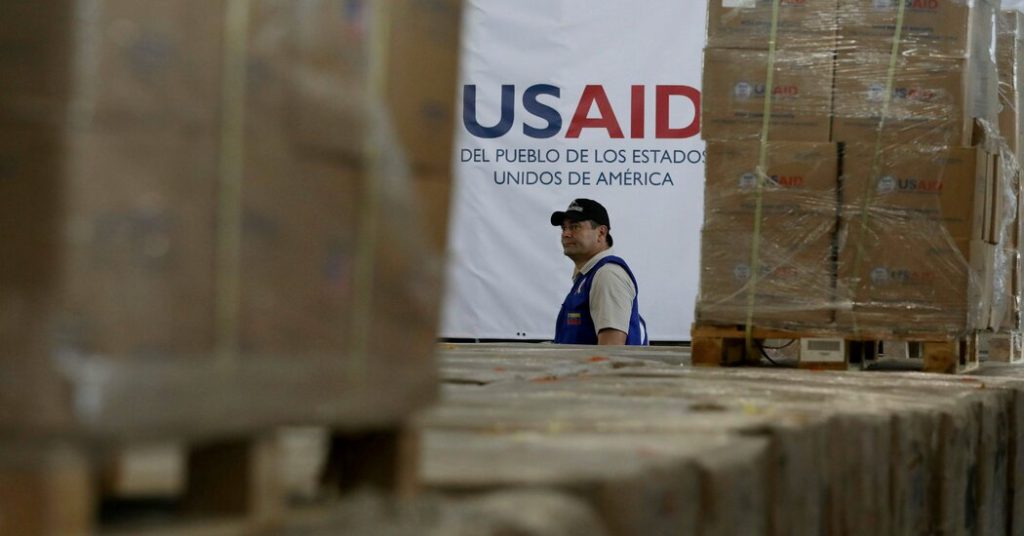

Numerous healthcare initiatives and medical research projects worldwide have been halted due to the Trump administration’s 90-day pause on foreign aid and stop-work orders.
In Uganda, the National Malaria Control Program has suspended insecticide spraying in village homes and stopped distributing bed nets for pregnant women and young children, according to Dr. Jimmy Opigo, the program’s director.
Medical supplies such as drugs for pregnant women’s hemorrhages and rehydration salts for toddler diarrhea cannot reach villages in Zambia because the trucking companies involved were paid through a suspended project by the United States Agency for International Development (USAID).
Numerous clinical trials in South Asia, Africa, and Latin America have been halted, leaving thousands of participants without continued treatment or access to their supervising researchers.
Over 20 researchers and program managers interviewed described the disruption in health systems across developing countries, many requesting anonymity out of fear for their projects’ future.
Several individuals broke down while recounting the swift dismantling of years of work.
The impacted programs provided crucial care for infectious diseases, potentially preventing millions of deaths from illnesses like AIDS, tuberculosis, and malaria while also showcasing the compassionate side of the United States in the midst of growing Chinese influence.
Requests for comment from the State Department and USAID went unanswered.
Currently, there is no authorized individual to receive millions of dollars’ worth of essential medical supplies for programs in some of the world’s poorest countries, following the halt on work.
Secretary of State Marco Rubio issued an exemption to the funding freeze for “lifesaving humanitarian assistance,” which includes core medications for urgent medical needs.
However, H.I.V. and tuberculosis treatment programs are still on hold until written confirmation is received that the exemption applies to them specifically.
A federal judge’s ruling blocked the freeze until Feb. 3, but many USAID offices and programs continue to operate as if the freeze is still in effect.
The lack of communication from USAID contacts has left employees uncertain about the status of their work, resulting in thousands losing their jobs and halting essential services.
The President’s Malaria Initiative, a major anti-malaria organization, terminated two-thirds of its staff, impacting critical research and prevention efforts.
The suspension of malaria work poses an immediate risk to lives, particularly in Africa where interventions are time-sensitive to combat peak transmission seasons.
The delivery of malaria drugs and tests in Myanmar has been frozen, impacting millions of children and communities facing a significant rise in malaria cases.
Numerous anti-malaria bed nets are stuck in production facilities due to frozen contracts, hindering efforts to combat the disease in sub-Saharan Africa.
The halt in USAID’s global health supply chain project disrupts the procurement of essential medical supplies for key areas like HIV, malaria, and maternal health, impacting vulnerable populations worldwide.
In Zambia, the public health supply chain supported by USAID has been paralyzed, affecting the distribution of medicines to rural health centers and disrupting the healthcare system.
Similar U.S.-funded systems in Mozambique, Nigeria, Malawi, and Haiti have also been halted, severely impacting medical supply distribution and healthcare access in these regions.