



Sebastian Reuter/Getty Images
The high fashion industry has always been synonymous with thinness, but for a brief moment in the 2010s, the body positivity movement was at the forefront.
It promised a revolution of accepting bodies of all shapes and sizes, welcomed curves and advocated for inclusion, particularly on the runway.
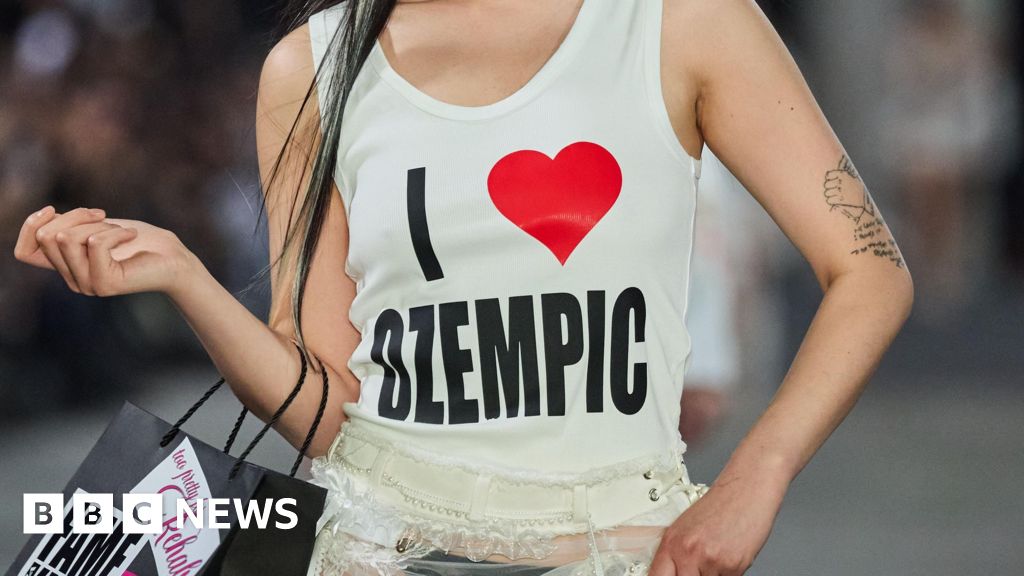
But 10 years on, industry insiders tell us things have shifted. Was body positivity a flash-in-the-pan trend? And with help with weight loss medication such as Ozempic, is skinny back for good?
We speak to designers, casting agents and models at Paris Fashion Week to investigate what is happening.
The 2010s: The era of body positivity
ANGELA WEISS/AFP via Getty Images
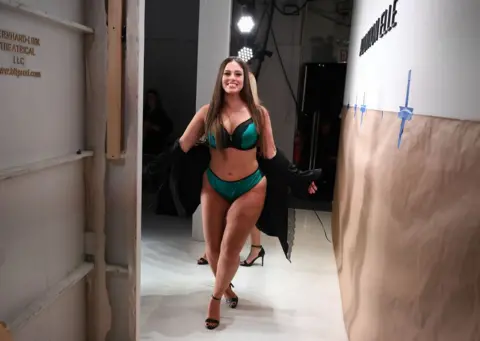
The body positivity movement finds its origins in the hazy days of the 1960s and was helped by icons like Marilyn Monroe who broadened Hollywood’s rigid beauty standard.
It was brought to the forefront again in the 2010s, when Instagram was launched and influencers began to highlight fashion and beauty outside of the glossy magazines and runways.
Helping this was the celebrity Kardashian family, whose curves triggered BBLs (Brazilian butt lift surgery) around the world.
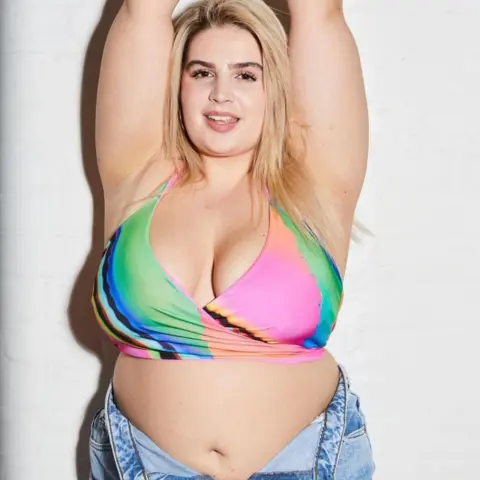
Enrika, a 28-year-old plus-sized model, said: “When the body positivity movement emerged, it felt incredibly empowering and liberating.”
“It felt like an act of rebellion – what had always been criticised was now being appreciated. It was as if we had finally had enough of being judged.”
Enrika/Gingersnap Models
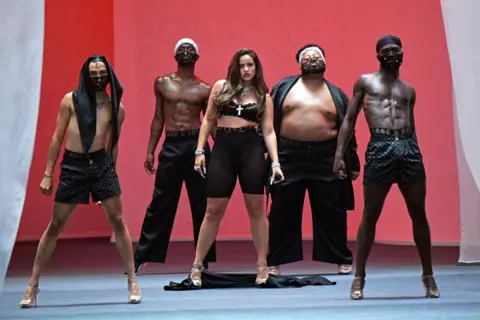
Plus-size models were being booked for big brands, including Rihanna’s highly coveted lingerie label, ‘Savage x Fenty’ which launched in 2018.
The brand, valued at $1bn, became known for its runway extravaganzas, reminiscent of a modern alternative to the iconic Victoria’s Secret shows, but this time with every body type on display.
Kevin Mazur/Getty Images for Savage X Fenty Show Vol. 2 Presented by Amazon Prime Video)
Felicity Hayward, a 36-year-old plus-sized model, reflects on being scouted in 2011.
“When I got that call from my first modelling agency Storm – who discovered Kate Moss – I thought I was being punk’d,” she said.
“Before the 2010s, attitudes around bigger bodies weren’t positive and I never thought being a plus-size model was a possibility.
“Seeing that narrative change over the last decade and a half has been life changing both emotionally, physically and financially.”
<img sizes="(min-width: 1280px) 50vw, (min-width: 1008px) 66vw, 96vw" srcset="https://ichef.bbci.co.uk/news/240/cpsprodpb/690b/live/ba5f8360-dfae-11ef-a319-fb4e7360c4ec.jpg.webp 240w,https://ichef.bbci.co.uk/news/320/cpsprodpb/690b/live/ba5f8360-dfae-11ef-a319-fb4e7360c4ec.jpg.webp 320w,https://ichef.bbci.co.uk/news/480/cpsprodpb/690b/live/ba5f8360-dfae-11ef-a319-fb4e7360c4ec.jpg.webp 480w,https://ichef.bbci.co.uk/news/640/cpsprodpb/690b/live/ba5f8360-dfae-11ef-a319-fb4e7360