


A New Chapter in Astronomy: The Nancy Grace Roman Space Telescope’s First Images
The cosmos never ceases to amaze us, and now, with the debut of NASA’s Nancy Grace Roman Space Telescope, our understanding of the universe is set to expand like never before. Launched on August 30, 2026, this ambitious project has already begun to capture awe-inspiring images that promise to unveil some of the universe’s deepest secrets.
What’s in the First Test Image?
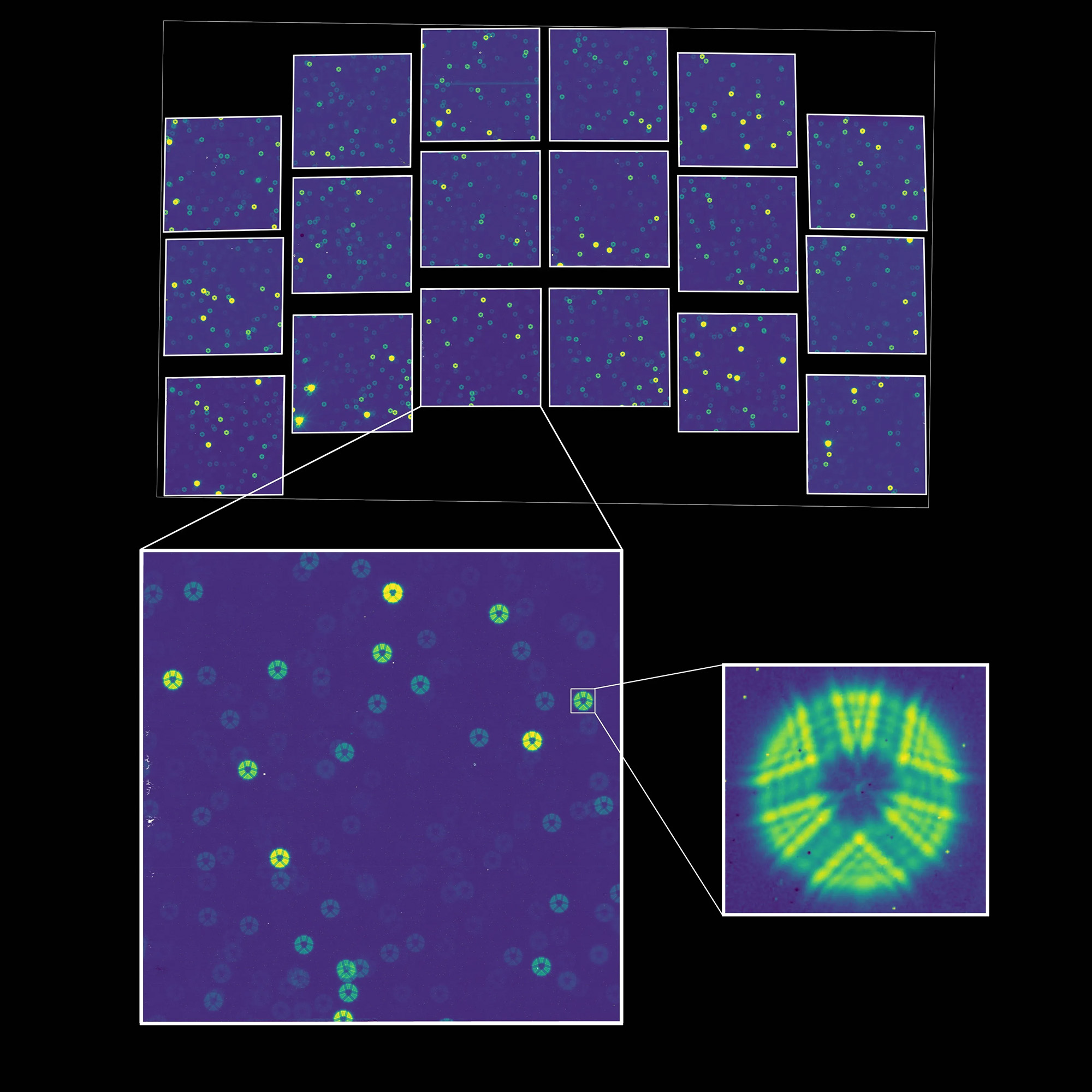
On September 15, 2026, Roman shared its first test image, showcasing hundreds of stars appearing as vibrant green rings of light. Captured using its advanced 300-megapixel infrared camera, this debut image, although not yet perfectly focused, marked a significant milestone in space observation. The initial outcome provides a glimpse into the telescope’s future capabilities: soon it will be able to deliver cosmic snapshots as crisp as those from the Hubble Space Telescope, but with an expansive field of view that is 100 times larger.
A Journey to L2
The Roman Space Telescope is currently on its way to Lagrange point L2, a particularly stable region in space located approximately one million miles from Earth. This point allows it to exist in a stable gravitational balance between Earth and the Sun, serving as a prime observation location for cosmic events. Alongside the James Webb Space Telescope and other scientific instruments, Roman will soon join the ranks of the most powerful tools for astronomical research.
Unveiling Secrets of the Universe
The telescope’s Wide Field Instrument (WFI) is designed to survey expansive areas of the sky, creating rich mosaics of the universe. Onboard, Roman features 18 individual detectors that convert light from distant stars and galaxies into impressive data. With each new observation, Roman is anticipated to transmit approximately 1.4 terabytes of data back to Earth daily—enough to fill several smartphones within a single day.
NASA scientists have high hopes for what this data will reveal. By conducting deep surveys of distant galaxies, Roman aims to refine our understanding of cosmic phenomena such as dark energy and the expansion of the universe. This mission could significantly contribute to our vast knowledge of cosmic history and its future.
Search for Exoplanets and Alien Life
Among its many functions, Roman is equally equipped to aid in the exploration for extraterrestrial life. Its built-in coronagraph allows the telescope to block out the light from nearby stars, enabling it to focus on exoplanets—those intriguing worlds orbiting other stars. This remarkable capability is expected to potentially increase the discovery rate of exoplanets from over 6,000 to more than 100,000 within the telescope’s projected mission duration.
A Longer Mission Ahead?
One surprising update from NASA is that Roman’s mission duration could extend from the initially planned ten years to a remarkable twenty-two years. Thanks to a successful thruster burn and additional fuel loaded onto the spacecraft prior to its launch, this telescope may serve us far beyond its expected lifespan, echoing the legacy of the beloved Hubble.
A Bold Future for Astronomy
The release of such stunning visuals from Roman’s first tests serves not just as proof of concept but as a beacon of hope for scientific discovery. NASA officials, including Josh Schlieder, chief WFI scientist, have expressed immense pride and excitement over achieving operational status in space. As Roman continues its commissioning process and gears up to deliver its first full scientific images by early 2027, the astronomical community stands on the brink of revolutionary advancements.
In the coming years, Roman promises to enhance our understanding of the universe and its profound mysteries. Whether exploring the origins of dark energy, imaging new celestial bodies, or expanding our search for alien life, the Nancy Grace Roman Space Telescope is on a path to change the way we view the cosmos. With its powerful capabilities and innovative instruments, the stars are truly just the beginning.